
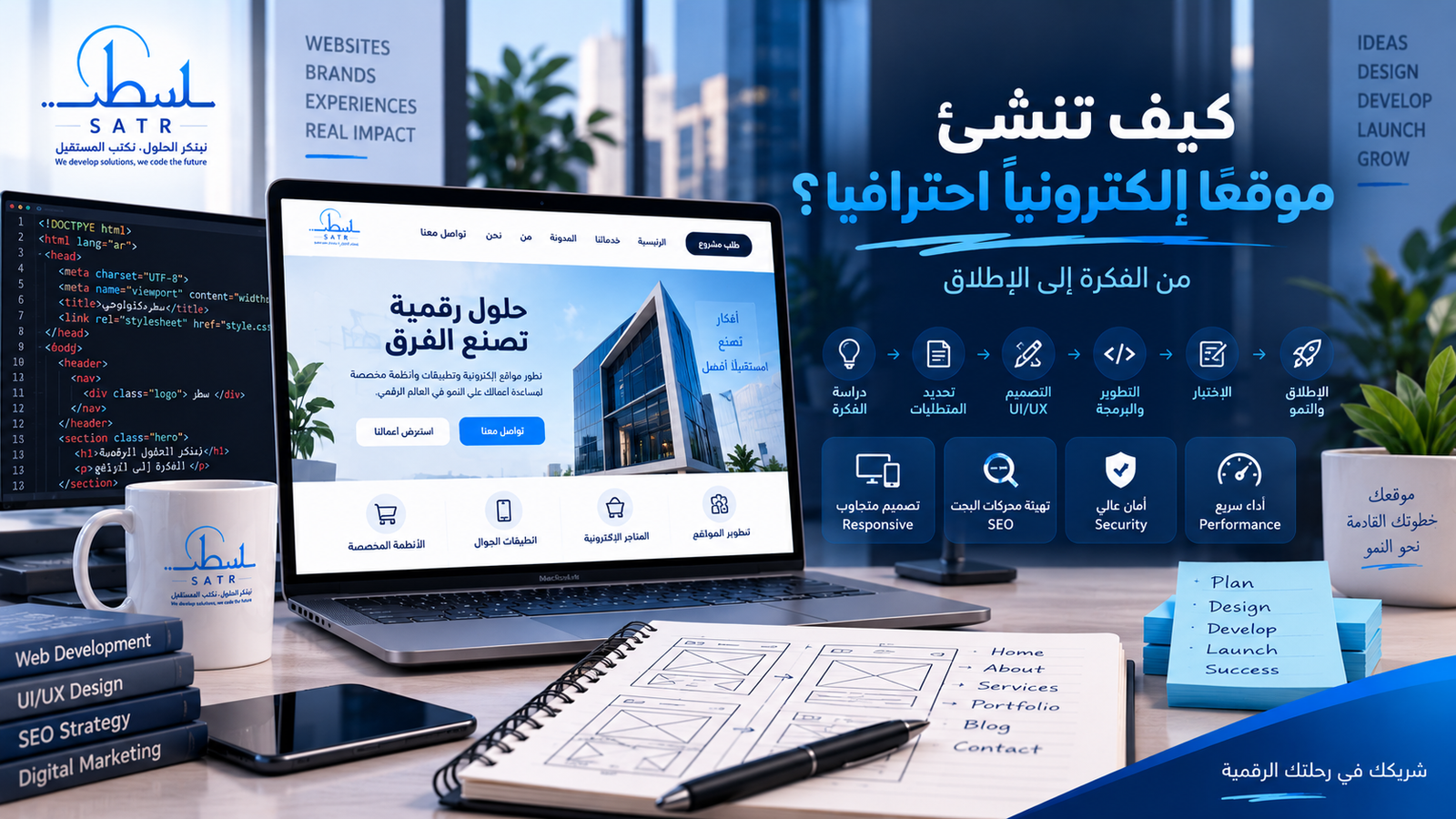
How to Build a Professional Website: From Idea to Launch
A website is one of the most important digital assets for a modern business. It is often the first interaction a potential customer has with a company and plays an important role in presenting services, showcasing previous work, publishing content, and generating new inquiries.
However, having a website does not automatically create an effective digital presence.
A professional website should combine strong design, usability, performance, mobile responsiveness, security, search engine optimization, and a technical foundation that can evolve with the business.
Define the Website's Purpose
Before choosing a design or development technology, determine what the website needs to achieve.
A website may be used to present a company, showcase services, display a portfolio, generate leads, publish content, manage bookings, provide customer portals, or power a specialized digital platform.
The clearer the objective, the easier it becomes to design the right experience.
Understand Your Audience
Identify the people who will use the website.
They may include customers, businesses, students, employees, partners, or users of a specific service.
Understanding the audience influences content, navigation, visual design, and calls to action.
Plan the Website Structure
Before designing individual pages, define the overall information architecture.
A business website may include:
- Home
- About
- Services
- Portfolio
- Project details
- Blog
- Careers
- Contact
- Project request
A clear structure helps users understand where they are and where they should go next.
Design the User Experience
UX focuses on how easily users can accomplish their goals.
Navigation should be clear, key actions should be visible, forms should be simple, and users should be able to reach important information without unnecessary steps.
Create a Strong Visual Interface
UI design includes typography, colors, buttons, imagery, spacing, icons, and page composition.
The visual direction should support the brand identity instead of following trends without purpose.
Make It Responsive
Modern websites should work well across smartphones, tablets, laptops, and large desktop displays.
Responsive design ensures that layouts adapt appropriately to different screen sizes.
Choose the Right Technology
Different websites require different technologies.
A small corporate website has different technical requirements from a platform with thousands of users, dashboards, permissions, and complex business processes.
Technology should therefore be selected according to the project's requirements.
Consider a Content Management System
If content changes regularly, an administration dashboard can make website management significantly easier.
It may allow teams to manage services, projects, articles, images, careers, requests, and SEO settings without requiring a developer for every content update.
Focus on Performance
Website performance directly affects the user experience.
Images should be optimized, unnecessary assets reduced, caching used appropriately, and hosting selected according to expected traffic and project requirements.
Prepare for Search Engines
SEO considerations include:
- Clear page titles
- Meta descriptions
- Readable URLs
- Structured headings
- Image alt text
- Mobile performance
- Relevant content
- Internal linking
Search optimization should be built into the website rather than treated as an afterthought.
Build Security Into the Project
Important security practices include HTTPS, protected administration access, permissions, input validation, secure databases, software updates, backups, and monitoring.
Security requirements increase when the website includes user accounts or sensitive information.
Plan Integrations
Websites may integrate with services such as WhatsApp, email, maps, payment gateways, CRM platforms, ERP systems, accounting solutions, SMS services, analytics platforms, and third-party APIs.
These integrations should be identified during the planning stage.
Test Before Launch
Before publishing the website, test links, forms, responsive layouts, browsers, emails, administration tools, permissions, performance, SEO elements, and error pages.
The website should also be reviewed for unfinished content or placeholder text.
Improve After Launch
A website should continue to evolve after launch.
Analytics can help identify popular pages, traffic sources, user devices, conversion paths, and areas where visitors leave the site.
These insights can guide future improvements.
Website or E-commerce Store?
A standard website typically focuses on presenting a company, services, content, or generating inquiries.
An e-commerce store generally adds functionality such as products, shopping carts, checkout, inventory, orders, payments, and shipping.
While a project may combine both, their requirements are different.
What Determines Website Development Cost?
Website cost depends on factors such as:
- Number of pages
- Design complexity
- Administration dashboard
- Languages
- User accounts
- Permissions
- Integrations
- Databases
- Custom functionality
- Security requirements
- SEO
- Infrastructure
A simple corporate website and a complex digital platform should not be evaluated in the same way.
From an Idea to a Professional Website
The process can be summarized as:
Objectives → Audience → Structure → UX/UI → Development → Content → SEO → Testing → Launch → Continuous improvement
A successful website is the result of design, content, technology, performance, and user experience working together.
Planning a Website?
Start by defining what the website needs to achieve.
Whether you need to present services, generate leads, build a professional digital presence, manage content, or create a complete digital platform, the project should begin with clear requirements.
Satr Technology designs and develops websites, digital platforms, mobile applications, e-commerce solutions, and custom business systems from initial planning and user experience design through development, testing, and launch.
Your website is not simply an online page. It is a digital connection between your business and your customers.
Related services
About Satr Technology Team
Satr Technology Team specializes in designing and developing digital products including websites and platforms, mobile applications, e-commerce solutions, and custom management systems. Through the Satr Technology Blog, we share practical technology insights that help businesses understand the process of building scalable digital solutions.